

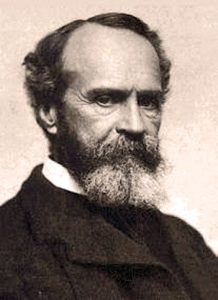
William James is infamously known as the “Father of American Psychology”, who also happens to be a renowned philosopher. There are many fields in psychology and philosophy towards which James has not only contributed massively but has also played the vital role of founding concepts. In this article, lets try to understand how William James understood Memory.
In “the Principles of Psychology” (1890) , William James talks about memory in somewhat exactly the same way Harry Lorayne does. If two people having the same experiences and same intellect and both learn a piece of information, however one of them will have a better memory of it than the other. According to William James, that person is the one who does two things;
Thinks over the information &
(more importantly I believe) “Weaves the experiences into systematic relations with each other” – in simpler words- such a person tends to create links and associations between different experiences.
William James here has said something decades ago which holds true today. In order for one to develop a better memory, creating links between things is pivotal. You can not memorize a new piece of information without already knowing another in your mind. Because it is that old information to which you associate or link the new piece of information. For example when you read “apple” you may be reminded of the fruit or the iphone/mac that you have seen before. It depends on your personal experiences or preferences how you remember the word Apple.
Further more Harry Lorayne very clearly and simply explains that you can memorize easily anything that you are “interested” in. And this is the phenomenon that I found William James referring to as well. He mentions how a poor college athlete in class, although, may not be able to memorize coursework, but will “astonish you by his knowledge of men’s records in various feats and games, and will be a walking dictionary of sporting statistics.”
This will be because of the two reasons mentioned above. Firstly, he goes over and reviews games scores in his mind constantly and secondly, he compares the results to what he already knows. In simpler words; he is INTERESTED in sports so he easily remembers sports.
William James also talks about the worse thing a school/college/university student can experience and definitely goes through; cramming. The process of spending last moments before an exam only in memorizing (or cramming) as much points of information as possible. All this is done only to be remembered in the next day during exam and then forgotten perfectly. Instead of this brute technique, James suggests that a student spend time memorizing smaller chunks of information, but earlier and gradually recurring in different contexts and then consider that information in various relations to other external incidents. This allows for the student to interact with that piece of information at different contexts and create more associations. More linked experiences are able to access more brain pathways and then become “permanent possessions”.
In conclusion, William James suggests that the more associations you create to a piece of information, whether logical or completely absurd, the more elaborate this web of associations, the more improved your memory will be. By this logic he explains how people are able to easily recall detailed feats of information and facts RELATING to their own fields of interest. And this is because that information is constantly gone over in their heads and related to other experiences.