
Successful Advertising Campaigns Answer What and How?
In his book “Seducing Strangers’, Josh Weltman tells us there are four steps of every successful advertising campaign. Fundamentally, a product needs to answer four basic questions that hang in the target customer’s head about the product.
- What is it?
- Why do I need it now?
- What makes it different?
- Who else thinks its good?
And these questions are answered by four kinds of advertisements.
1.
For the first question, Weltman suggests the term “introductory ads” these are ads that simply inform the viewers about what a certain product is, and what benefit can its consumers get from it. Such adds are created during the launch phase of a product, or maybe when introducing a new feature.
The key purpose for such ads is simple = generate inquiries. The more customers become intrigued by an upcoming product, idea or service the more they want to know about it. Retail outlets can measure this by number of people visiting their store, online traffic or general telephone inquiries. In short anything that tells you that your message made people curious enough to know more.
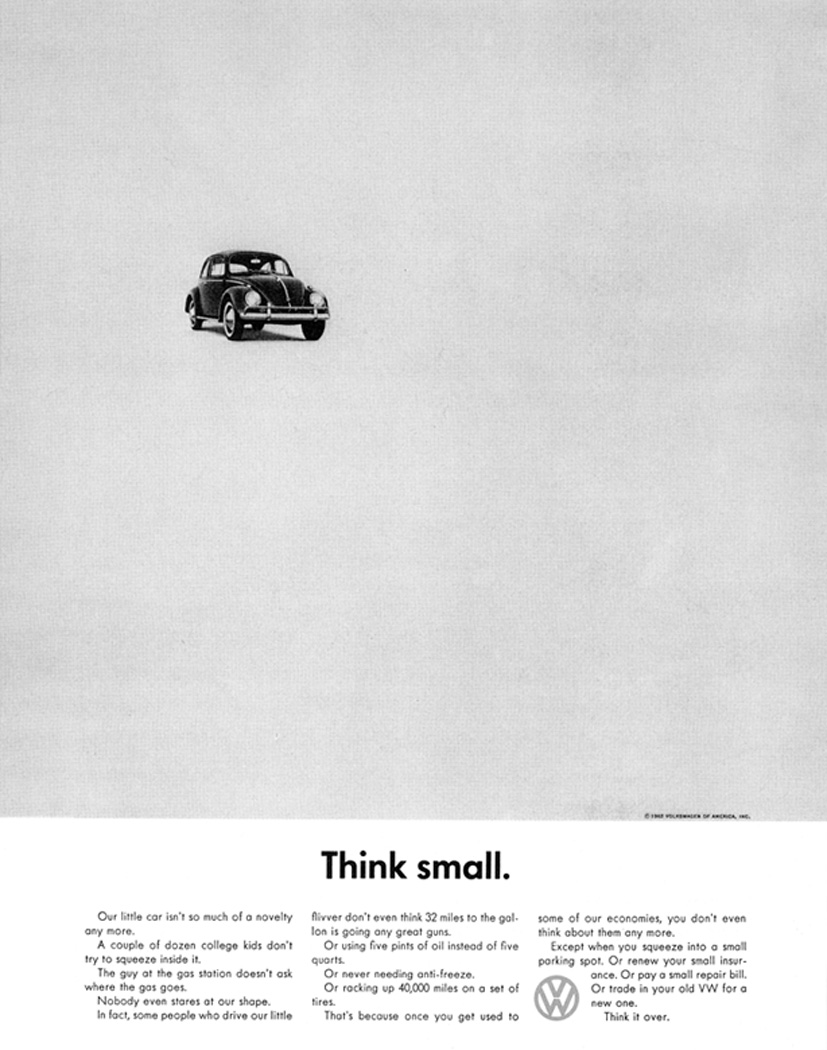
What is the simplest way to achieve success in this stage? After all, most businesses (90%) fail during their introductory phases right? Well, its quite simple: generate curiosity. The best introductory messages leave something out, according to John Weltman. For example by putting out incomplete or non-sense statements, which are then made clear by either imagery or counter phrases are usually more successful advertisement attempts. The first part, which is incomplete creates dissonance in the reader and he/she is motivated to know what the heck is going on. Then the second part, which clarifies, either answers or confirms their thoughts; and they feel a slight adrenalin rush, and hence satisfied. This biological response makes them feel good and creates a positive association in the customer’s head for the product. For instance this “Think Small” Campaign captures this idea by creating confusion in the image, and then clarifying the dissonance in the small text beneath it:
2.
The second question is addressed by “trial ads”. These aim to create a sense of urgency and inspire customers to act now. Purpose? To increase sales of course. Examples of such adds include statements like “limited time offer” “only 4 left in stock” “Special Pakistan day offer. Avail it Today!” the objective of such adds should be customers who have made inquiries and hence shown an interest in investing further. Best way to achieve this? Surprisingly, we humans are attracted to anything that is “scarce”. If we know we wont have it, we would want it more. So by limiting the customers ability to get a product actually increases their chances of getting it. Cool and infernal.
3.
Then come the “differentiating ads” They define products uniqueness and why it is better than its competitors. Purpose of this sort of campaign is to communicate a companies promise to its users. The promise must be unique, memorable and relevant. This is the stage that impacts a brands long-term reputation. The more mediums, stories or ways, that make this promise truer the better. This is where a brand creates a special aura around its product. For example Ufone has managed to create an unsaid edge over all other telephone networks through their humorous ads: they make you smile!
4.
Finally there is the “Mutual love and respect ads” or simply “shared value ads”. They are about the customers of the brand and relate specifically to them. They could be in forms of short stories, telefilms or even games that only the users of the product can understand and relate to. If the ad becomes an inside joke for the customers, it has attained its purpose. Josh thinks of them as “thank you” notes. Here the company differentiates not the product, but the special qualities of its customers. For example Apple users are not ordinary, they “think different”. The aim of such ads is to keep the customers and keep them satisfied. After all it is usually 20% of the clientele that usually generates 80% of revenue for most firms.
Summary
Every advertisement campaign is dedicated to answering four possible questions about their product essentially in hope of higher sales.
- What is it ?
- Why do I need it now?
- What makes it different?
- Who else thinks its good?
And Josh Weltman suggests four types of ads that can answer them;
- Introductory ads that create curiosity in potential customers.
- Trial ads, designed to create a feeling of urgency.
- Differentiating ads, that build on brand relationship.
- Shared value ads, which keep customers by making them part of an exclusive group.
I hope you enjoyed and learned from this article!